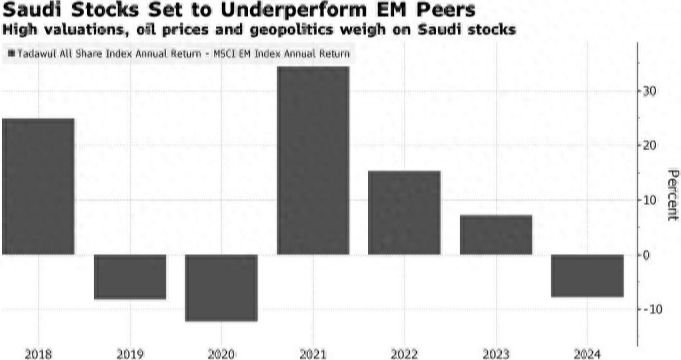
Let's cut to the chase. Asking for a single Saudi Arabia stock market prediction is like asking for the weather forecast for an entire year. You'll get a general idea, but the daily reality is a mix of sunshine, clouds, and occasional storms driven by forces both within and beyond the country's control. From my experience tracking emerging markets, the prediction for the Tadawul – Saudi Arabia's stock exchange – isn't a simple "up" or "down." It's a story of a market in a profound transition, pulled between its traditional oil-based bedrock and an ambitious, high-stakes diversification drive under Vision 2030. The outlook is cautiously optimistic, but the path is paved with specific risks and sector-specific opportunities that generic forecasts often miss.
What You'll Find in This Guide
The Key Drivers Shaping the Saudi Market Forecast
To understand where the Tadawul All Share Index (TASI) might head, you need to watch four interconnected forces. Getting any one of these wrong can lead to a flawed prediction.
Oil Price Volatility: The Unshakable Foundation (and Ceiling)
Let's not kid ourselves. Despite all the talk of diversification, the Saudi stock market prediction remains tethered to oil. Government revenue, corporate earnings for giants like Saudi Aramco, and overall investor sentiment swing with Brent crude. A period of sustained high prices above $85/barrel fills state coffers, funds Vision 2030 projects, and boosts market liquidity. It creates a positive backdrop.
But here's the nuance most miss: the relationship isn't perfectly linear anymore. During past oil crashes, the market fell hard. Now, there's a slight buffer. The government has shown a willingness to draw on its reserves and debt markets to maintain spending, which supports the non-oil economy. However, that buffer has limits. A prolonged slump below $70 would inevitably strain finances and spook investors. My prediction? Oil will remain the primary mood-setter, but its grip is slowly loosening as other sectors grow.
Saudi Vision 2030: The Multi-Trillion Dollar Catalyst
This isn't just political sloganeering. Vision 2030 is the single biggest factor altering the long-term Saudi stock market prediction. We're talking about a deliberate, capital-intensive reshaping of the economy. From where I sit, the market impact is twofold.
First, it's driving massive project spending in sectors like tourism (NEOM, the Red Sea Project), entertainment (Qiddiya, Riyadh Season), and logistics. This directly benefits listed construction, cement, and telecom companies. Second, and more crucially, it's forcing state-owned giants to behave more like listed companies, focusing on profitability and shareholder returns to help fund the vision. The Aramco IPO was just the start. Expect more asset sales, spin-offs, and demands for efficiency from the Public Investment Fund's (PIF) portfolio companies. This corporate governance shift, though slow, is a powerful undercurrent for stock performance.
Interest Rates and Global Capital Flows
Saudi Arabia's currency is pegged to the US dollar. This means the Saudi Central Bank (SAMA) generally follows the US Federal Reserve's interest rate moves. Higher US rates make dollar-denominated assets more attractive, which can pull foreign capital away from emerging markets like Saudi Arabia. The prediction here hinges on the global macro picture.
However, Saudi Arabia has a unique advantage: it's often seen as a regional safe haven. During periods of Middle Eastern instability, money from neighboring countries can flow into the deeper, more liquid Tadawul. I've seen this flight-to-quality play out repeatedly. So, while global rates are a headwind, regional dynamics can provide a countervailing tailwind.
Geopolitical and Regional Sentiment
This is the wildcard. Tensions in the Gulf, conflict in the region, or a major shift in diplomatic relations can cause sudden volatility. The market has generally shown resilience to regional shocks, pricing them in quickly, but they remain a source of short-term risk that any honest prediction must acknowledge.
The Core Prediction Takeaway: The Saudi stock market forecast is a tug-of-war. On one side, oil prices and global rates provide traditional economic gravity. On the other, Vision 2030 spending and reform momentum provide powerful upward thrust. The net outlook is for moderate, volatility-interrupted growth, with performance increasingly diverging by sector.
Sector-by-Sector Deep Dive: Where the Real Action Is
A broad index prediction is useless for making decisions. The real value lies in understanding which parts of the market are positioned to win or lose in this new environment. Based on current project pipelines and policy direction, here's how I see the landscape.
| Sector | Short-Term Outlook (1-2 Years) | Long-Term Driver | Key Risk |
|---|---|---|---|
| Energy & Petrochemicals | Tied to oil prices. Stable dividends, less explosive growth. | Aramco's gas expansion and chemical diversification (e.g., SABIC). | Global decarbonization pressure and oil demand peaks. |
| Financials (Banks) | Strong. Benefiting from higher interest rates and Vision 2030 project financing. | Growth in mortgage lending and a burgeoning SME sector. | Potential rise in loan defaults if economic growth stalls. |
| Materials & Construction | Very Positive. Direct beneficiaries of giga-project spending. | NEOM, Diriyah Gate, Qiddiya, and national infrastructure plans. | Execution delays, cost overruns, and margin pressure from competition. |
| Healthcare | Steady Growth. Population growth and privatization drive demand. | Government push to privatize healthcare services and attract medical tourism. | Regulatory changes and reimbursement rate pressures. |
| Retail & Consumer Staples | Mixed. Resilient but facing inflation pressures on consumer wallets. | A growing, young population with rising disposable income (long-term). | Intense competition and shifting consumer habits towards e-commerce. |
| Telecom & Technology | Transformative. 5G rollout and digitalization across all sectors. | Vision 2030's focus on a digital economy and innovation. | High capital expenditure requirements and regulatory scrutiny. |
Looking at this table, a clear theme emerges. The old market was about energy and banks. The new market prediction is about construction, digital infrastructure, and the "enablers" of Vision 2030. A common mistake I see is investors over-allocating to the familiar oil names for "safety," while missing the structural growth happening in less flashy sectors like logistics or building materials.
Let's talk about a specific case: the tourism push. It's not just about building hotels. It requires airport upgrades (benefiting aviation services stocks), new roads and utilities (construction and materials), digital payment systems (fintech and banks), and entertainment venues. The ripple effect is vast. A savvy investor looks for companies positioned in this supply chain, not just the final resort operator.
Practical Investment Strategies for the Saudi Market
So, how do you translate this Saudi stock market prediction into an actionable plan? Throwing money at the index ETF might work, but it dilutes the sectoral opportunities. Here’s how I’d approach it.
Focus on the "Picks and Shovels" Companies: During a gold rush, sell picks and shovels. In Saudi’s transformation, invest in the companies providing essential materials, financing, and logistics. Cement producers, commercial banks, and industrial gas companies often have more predictable revenue streams tied to the vision's execution than the project developers facing execution risk.
Prioritize Dividends in a Volatile Market: The Tadawul has a number of companies with strong dividend yields, particularly in banking and energy. In a market where price appreciation might be choppy, dividends provide a tangible return and a cushion against downside. Reinvesting those dividends can compound returns significantly over time.
Use Dollar-Cost Averaging (DCA): Given the volatility from oil and geopolitics, trying to time the market is a fool's errand. A disciplined DCA strategy—investing a fixed amount regularly—smooths out your entry price and removes emotion from the process. It's a boring but brutally effective tactic for long-term Saudi market exposure.
Beware of Overhyped IPOs: The pipeline for new listings is strong. While some will be fantastic companies, there's a tendency for IPO prices to bake in excessive optimism. I often wait for the post-IPO lockup period to expire (usually 6 months) and let the stock find its true trading level before considering an entry. The initial pop isn't always worth the risk.
Finally, do not ignore currency risk if you're a foreign investor. Your returns are in Saudi Riyals (SAR). If the US dollar strengthens significantly against most currencies (even with the peg, cross-currency effects matter), your gains when converted back could be diminished. It's a secondary factor, but one that professionals always factor in.
Your Saudi Stock Market Questions Answered
Is the Tadawul too dependent on oil for it to be a good long-term investment?
The dependency is decreasing, but it's still the dominant factor. That's not inherently bad. It provides a foundational cash flow that funds diversification. The key is to view oil as the baseline and diversification as the growth engine. A balanced portfolio that includes both stable oil-linked dividend payers and growth-oriented "Vision 2030" plays captures the full picture. Ignoring the market solely because of oil means missing the deliberate, well-funded transition happening.
What's the biggest mistake foreign investors make when predicting the Saudi market?
They apply a Western or developed-market lens. They look at P/E ratios in isolation and miss the governance premium or discount. They underestimate the impact of the Public Investment Fund as both a player and a market-maker. They also overlook the liquidity dynamics—the Tadawul can be driven by local and regional retail investor sentiment, which doesn't always align with fundamental analysis. Understanding these local market microstructures is as important as the macro story.
How does inflation in Saudi Arabia affect the stock market prediction?
Inflation has been relatively contained but is a concern. It erodes consumer purchasing power, which hurts retail and consumer discretionary stocks. However, for banks, moderate inflation in a rising rate environment can boost net interest margins. For materials and construction companies, they can often pass on input cost increases in a hot project market. The effect is uneven. Currently, inflation is a secondary concern compared to oil price direction and project execution, but it's a growing factor to monitor, especially for consumer-facing investments.
Are Saudi bank stocks a safe bet given the current outlook?
They are among the safer bets, but "safe" is relative. Banks are classic proxies for economic growth. They benefit from higher interest rates and are central to financing Vision 2030 projects, leading to strong earnings visibility. The sector is also well-regulated. The risk isn't immediate safety; it's saturation and future asset quality. If too much lending is concentrated in real estate or construction and a project stumbles, it could ripple through bank balance sheets. My approach is to favor the largest, most diversified banks over smaller, niche lenders for core exposure.
The Saudi Arabia stock market prediction is ultimately a story of managed transition. It offers a unique proposition: exposure to traditional energy wealth coupled with a front-row seat to one of the world's most ambitious economic overhauls. Success requires moving beyond a simple bullish or bearish call. It demands a sector-specific, strategy-aware approach that respects the market's inherent ties to oil while strategically betting on the sectors building the post-oil future. The volatility isn't a bug; it's a feature of this transformative phase, creating opportunities for the disciplined investor.